



ArmTec HyperFlex Waterproofing System
Not Just a Coat a Waterproofing System Built for South African Conditions
TL;DR
For applicators tired of callbacks, ArmTec HyperFlex is a complete layered waterproofing system, not a single product. Here’s the quick breakdown:
- It’s a system, not a coat: Reinforcing mesh, embedment layer and flexible topcoat working together as one engineered waterproof skin.
- Seamless and fully bonded: No overlap joints to fail, no open flame during installation, full adhesion to the substrate.
- Five proven sub-systems: From new slabs and balconies to overlaying failed torch-on, each application targeted to a specific substrate and problem.
- 10-year warranty backed by 15+ years of fieldwork: A 2% comeback rate when correctly installed, and most of that’s third-party damage rather than system failure.
*Single-coat rubberising products promise miracle results. Real waterproofing needs a real system.
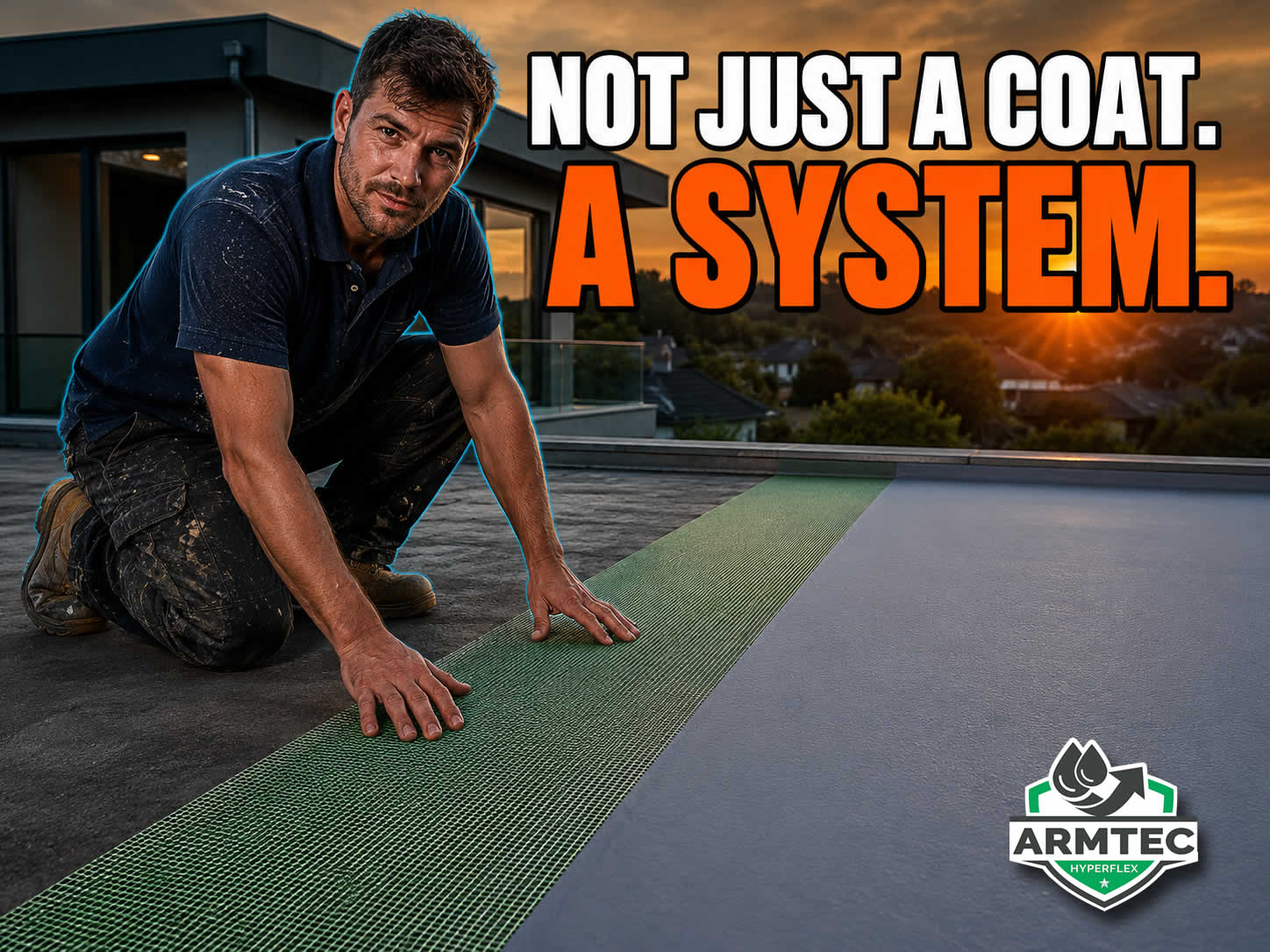
ArmTec HyperFlex isn’t a waterproofing product. It’s a complete waterproofing system, built around three working parts: a fibreglass reinforcing mesh embedded into the substrate, a cementitious bonding membrane that locks the mesh in place, and a flexible liquid rubberised topcoat that creates the final seamless waterproof skin.
That distinction matters, and it’s the whole reason this article exists.
If you’ve been doing waterproofing work in South Africa for more than a few years, you’ve watched the industry split into two camps. One camp still rolls out torch-on bitumen sheets, fires up the propane, and hopes the overlaps hold. The other camp has gone the opposite direction completely. They sell clients on the idea that one or two coats of a single rubberising product will somehow waterproof anything and last for a decade.
Both camps have a problem. Both groups get callbacks. And both groups are losing work to applicators who’ve stopped guessing and started installing actual systems.
Why torch-on and “wonder coat” rubberising both keep failing
The trouble with torch-on
Torch-on does what it’s supposed to do on the right roof, when it’s installed by a crew that knows what they’re doing. The problem is that the right roof and the right crew are getting harder to find.
Torch-on is a rolled sheet of modified bitumen, applied by heating the underside with a handheld propane torch until it fuses to the primer below and to the overlapping edge of the previous sheet. Every roll has edges that overlap the next roll. Those overlaps are sealed by heat at the time of installation. Over the years, thermal cycling works them loose, water finds the weakest seam, and the roof starts dripping somewhere the seam isn’t even visible from below.
Then there’s the open flame. Torch-on installation requires a heat source on the roof. On older roofs with timber substructures, or on body corporate buildings with strict insurance requirements, the fire risk is a real constraint. Many of the worst commercial roof fires in this country started with a propane torch on a flat roof.
Add to that the practical limitations. Torch-on doesn’t bond well around PVC outlets and drain pipes, because the heat needed to fuse the membrane will damage the plastic. The membrane is brittle within a decade in South African UV. Repairs mean stripping, re-priming and reinstalling, with skip hire and landfill fees on top.
The single-coat rubberising trap
On the other side of the industry sits the single-coat rubberising product. You know the pitch. One product, painted on like a thick coat of paint, and somehow it’s meant to waterproof concrete slabs, metal roofs, balconies, water features and anything else the salesman thinks of that morning. Some of these products come with 10-year guarantees from companies that have been around for three.
The marketing is excellent. The chemistry, less so.
A single-coat rubberising product, applied without proper preparation, without mesh reinforcement, and without an embedded detail strategy for corners, outlets and movement joints, will fail in one of three ways:
- It cracks at the corners and joints where the substrate flexes most.
- It debonds at the parapet wall turnups where capillary moisture lifts it from the underside.
- It UV-degrades on the upper surface, and water finds its way through pinholes that weren’t visible a year earlier.
The applicator gets called back, repaints, gets called back again. The cycle continues. Margins disappear. Reputation goes with them.
What ArmTec HyperFlex actually is
ArmTec HyperFlex was designed to solve both of these problems. It’s a layered system, and the layers are doing different jobs.
The system has three core working parts, with supporting products at the details, and the principle is straightforward. Each layer does one job well, and the combined system does the job no single product can do alone.
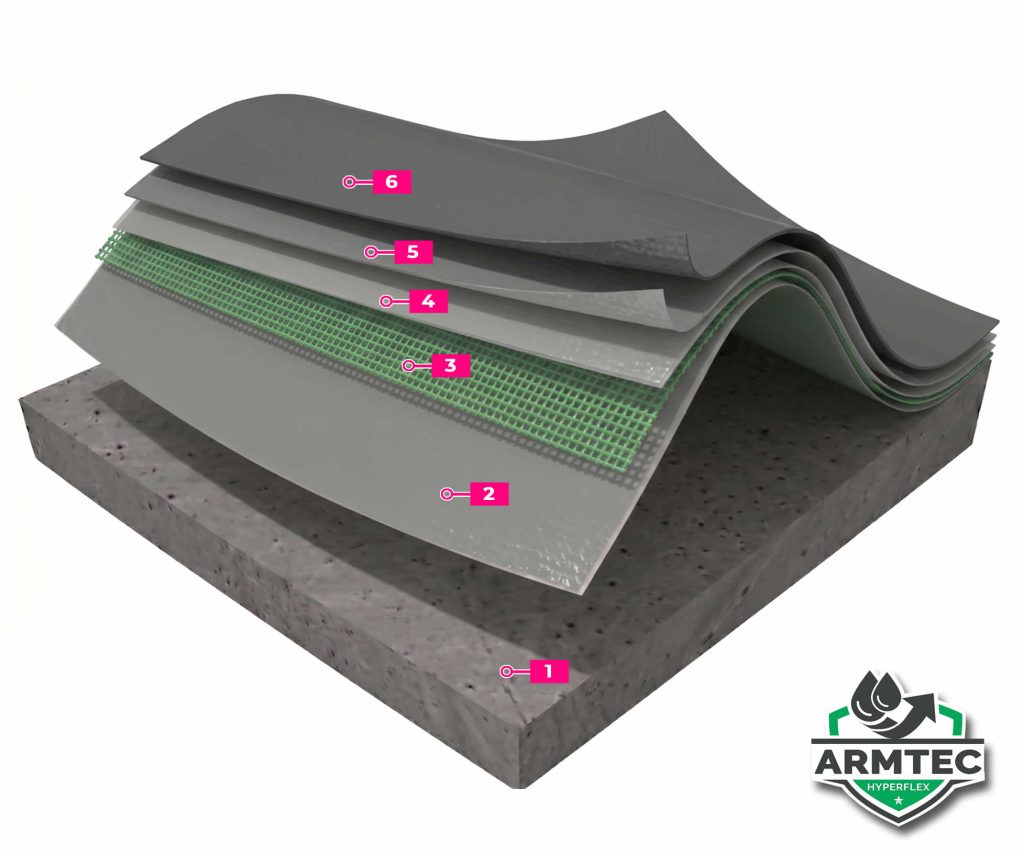
ArmTec HyperFlex Core Composition
Layer 1: The mesh (ArmTec Mesh)
ArmTec Mesh is a woven fibreglass reinforcing mesh with an alkali-resistant coating, supplied in 50-metre rolls at 1.5 metres wide. It’s a 118 g/m² mesh with a 5x5mm grid, designed to absorb tensile stress and resist the alkaline environment of cementitious materials.
This is the structural backbone of the system. It gives the waterproof membrane something to hold onto when the building moves, and buildings always move. Concrete shrinks. Slabs flex with temperature. Walls settle. The mesh distributes that movement across the system instead of letting it concentrate at a single failure point.
Layer 2: The embedment (HyperFlex)
HyperFlex is the mesh-embedding agent. It’s a two-component fibre-reinforced polymer-modified cementitious membrane that’s applied directly over the mesh, then pressed through it to bond the mesh to the substrate below.
This is where ArmTec HyperFlex earns its name. The product doesn’t sit on top of the substrate. It impregnates the mesh, locks the mesh to whatever is underneath, and creates a single continuous reinforced layer.
One important note for applicators new to the SealPro range. HyperFlex and HydroSeal HF are two different products. HyperFlex embeds the mesh. HydroSeal HF is the final waterproof topcoat. They are not interchangeable. We’re flagging this early because the similar names cause confusion, and substituting one for the other will compromise the system.
Layer 3: The topcoat (HydroSeal HF)
HydroSeal HF is a high-performance polymer-blended liquid rubberised coating that forms the final flexible waterproof membrane. It’s applied in two coats over the embedded mesh, with full cure delivering a seamless waterproof skin that flexes with the structure below.
This is also the product that does the detail work. Corners, parapet turnups, outlets and flashings all get a sandwich treatment of HydroSeal HF plus StretchSeal Membrane plus HydroSeal HF before the field coats go on. The StretchSeal Membrane is an 80 GSM stitch bond polyester (commonly called stitch bond in the South African trade) that reinforces detail points the same way ArmTec Mesh reinforces the field.
Together, the system forms a seamless, fully bonded, mesh-reinforced flexible waterproof membrane. No overlap joints. No open flame on the roof. No single-product gamble. You can read more about HydroSeal HF on the product page, where coverage rates, cure times and colour options are spelt out in detail.
The five sub-systems of ArmTec HyperFlex
ArmTec HyperFlex isn’t a single installation sequence. It’s five distinct sub-systems, each engineered around a specific substrate and a specific problem. The same core products, but a different application sequence for each scenario.
Here’s what each one solves.
1. New concrete roof slab
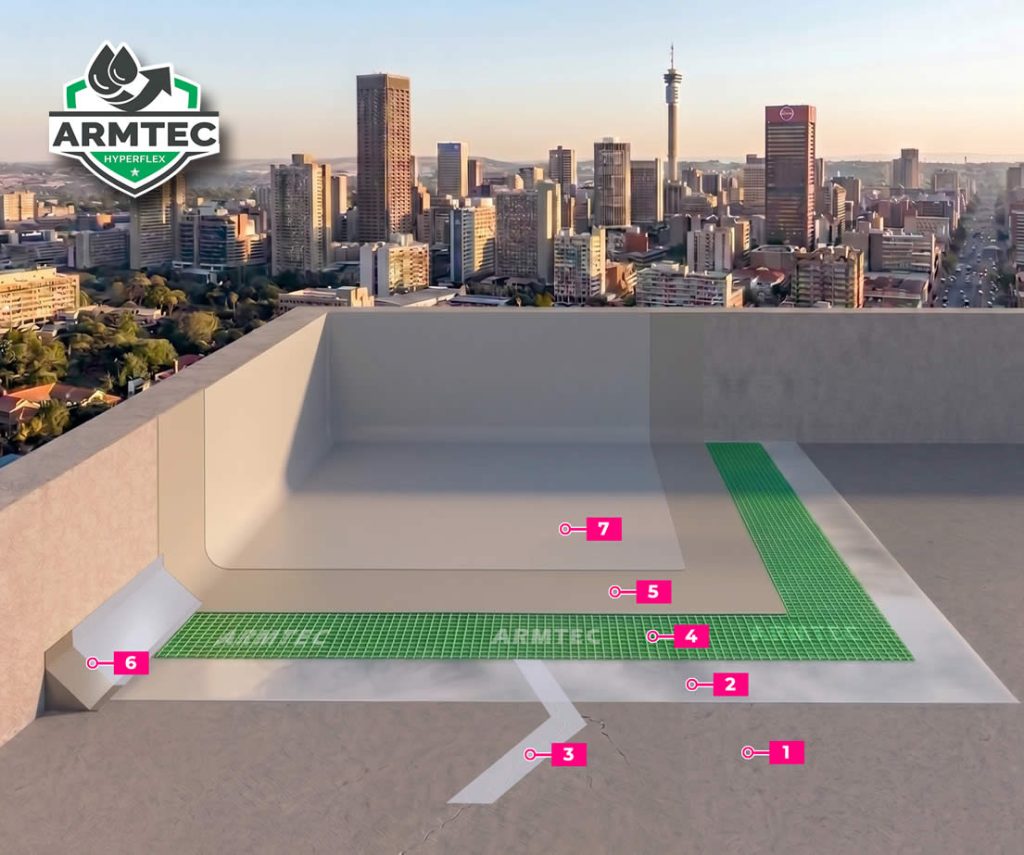
ArmTec HyperFlex New Flat Roof Waterproofing System
For new construction on flat concrete roof slabs, the build-up is: clean, fill cracks with Posi Screed, prime with Penetrar, treat movement joints with Flex and StretchSeal Membrane, install 45° cement corner flashings at parapet turnups, roll out ArmTec Mesh, embed with HyperFlex, seal outlets and corners with HydroSeal HF and StretchSeal Membrane, then two full coats of HydroSeal HF.
The result is a brand new roof slab with a complete reinforced waterproof system installed from day one. No retrofit. No legacy waterproofing failures to inherit.
Explore the new concrete roof slab waterproofing system
2. Over existing torch-on
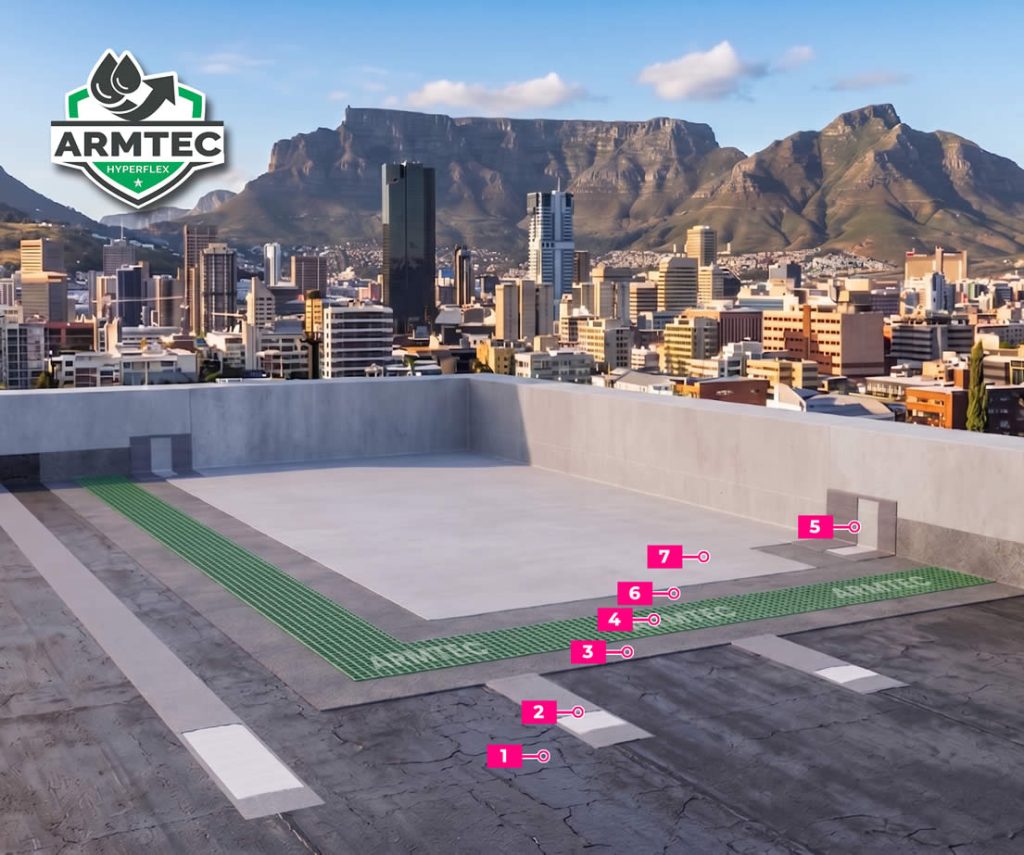
ArmTec HyperFlex Torch On Repair Waterproofing System
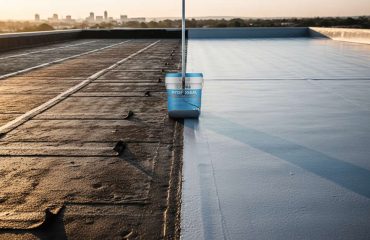
This is the sub-system earning ArmTec HyperFlex its reputation in the South African market. Failing torch-on doesn’t have to be stripped and replaced. HyperFlex has extreme adhesion to torch-on, which means a properly prepped existing torch-on roof can be overlaid with the full ArmTec HyperFlex system directly.
You repair the overlaps and damaged areas with Flex and StretchSeal Membrane. You roll out the ArmTec Mesh over the full surface. You embed it with HyperFlex pressed through to bond to the torch-on below. You seal the outlets and parapet corners. You apply two coats of HydroSeal HF.
No demolition. No skip hire. No landfill. A failing torch-on roof gets a new 10-year-plus waterproof skin without the disruption and cost of strip-and-replace.
Explore the over existing torch-on waterproofing system
3. Over existing tiles
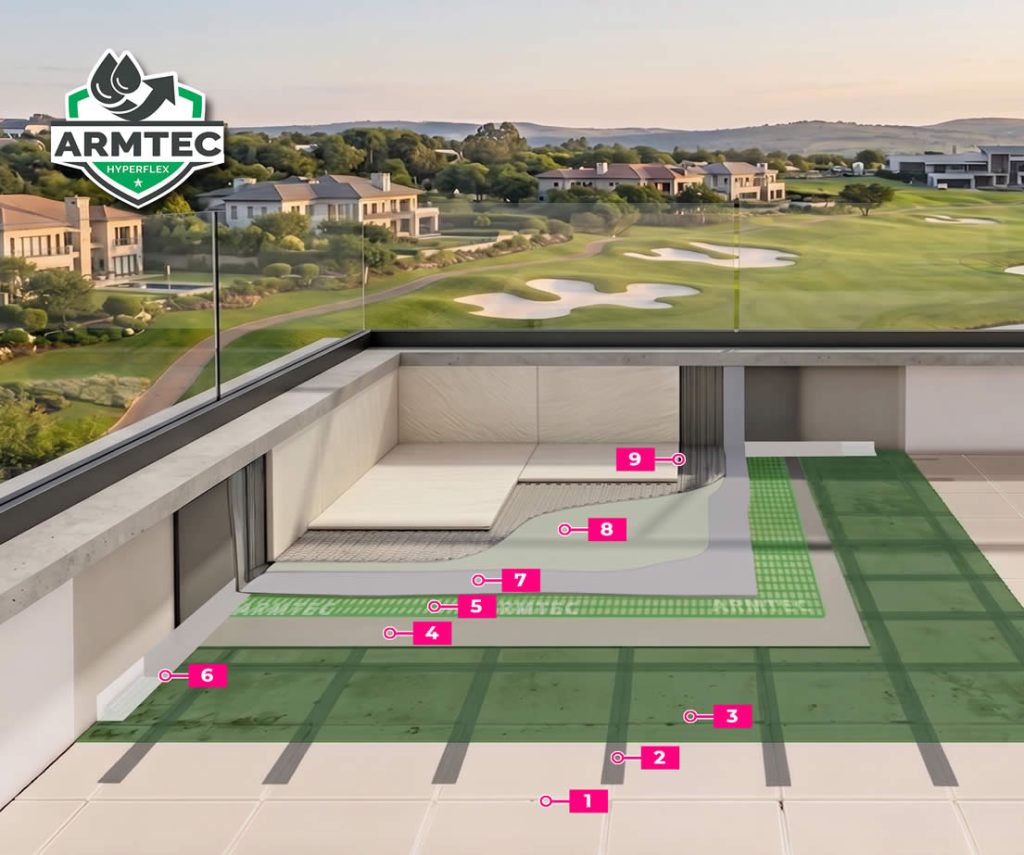
Waterproofing + Tiling over exsisting tiles surface
For balconies, bathrooms and wet areas where the client doesn’t want to strip existing tiles, this sub-system waterproofs over the top.
Skirting tiles come off (floor tiles stay). The grout lines and chips get filled with Posi Screed. The full tiled surface gets primed with UltraBond WP, our two-part cementitious adhesion primer. The mesh goes down, HyperFlex embeds it, the corners get treated with Flex and StretchSeal Membrane (no 45° flashings here, because corners need to stay square for the new tiles to come), and two coats of HydroSeal HF finish the waterproofing.
Then, and this is the part that surprises applicators new to the system, UltraBond WP is applied over the cured HydroSeal HF to convert the waterproofing into a tile-ready substrate. Standard tile adhesive bonds straight onto it. The client gets fully waterproofed tiles laid over their old tiles, with no demolition.
Explore the Over existing tiles waterproofing system
4. Tile-ready balcony (stripped screed)
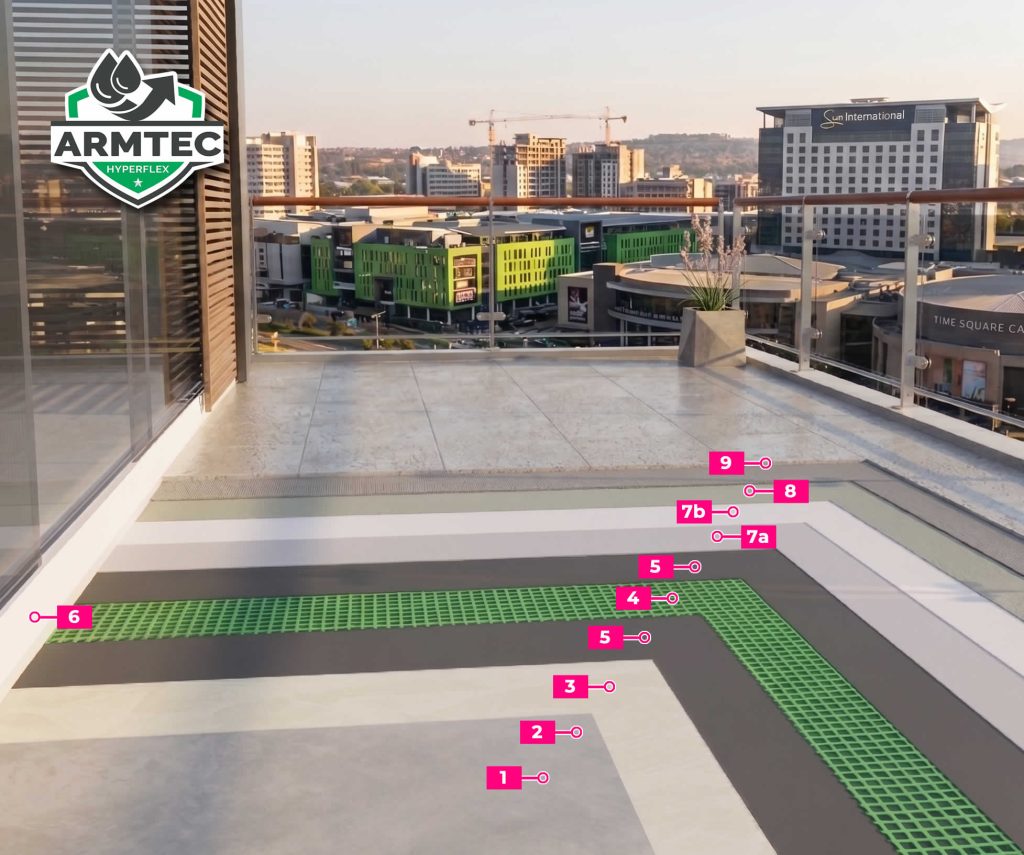
ArmTec HyperFlex Under Tile – System for waterproofing and installing tiles on balconies + showers
When the client is doing a full balcony renovation and the tiles are coming off anyway, this sub-system rebuilds from bare screed.
Strip tiles and adhesive. Repair the screed with Posi Screed. Prime with Penetrar. Mesh, HyperFlex embedment, corner detailing with Flex and StretchSeal Membrane. Two coats of HydroSeal HF. UltraBond WP over the cured topcoat. Tile straight onto it.
It’s the cleanest implementation of the system, and it’s the right choice on full balcony rebuilds where the screed is exposed and accessible.
Explore the system to waterproofing and installing tiles on balconies + showers
5. Bitumen waterproofing renewal
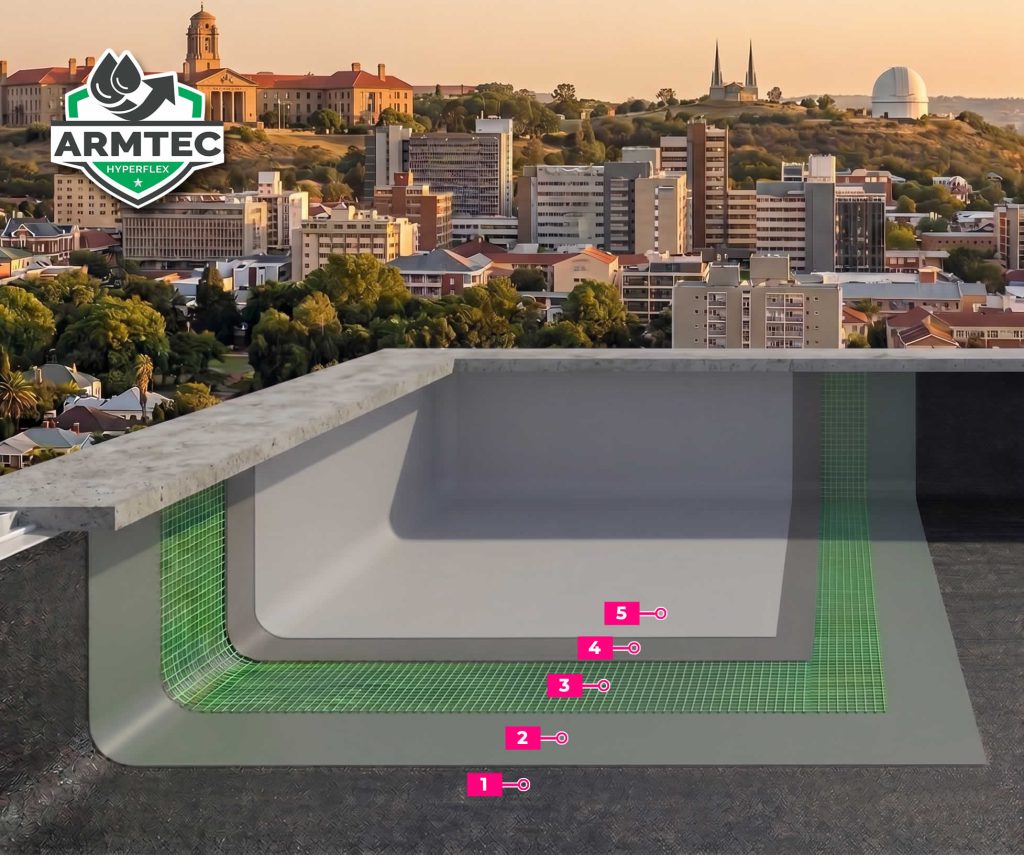
ArmTec HyperFlex System to repair the bitumen waterproofing layer on old flat roofs
This one matters for applicators inheriting an old bitumen-coated roof. Bitumen waterproofing is different from torch-on, and the difference is the whole reason this sub-system exists.
Torch-on is the rolled sheet, heat-fused with overlapping seams you can see. Bitumen waterproofing is a cold-applied liquid product, painted onto the substrate by hand, with no seams but with a tendency to stay “playable” for years afterwards.
That playability is a system risk. Wet or soft bitumen off-gasses through any waterproofing applied on top, causing blistering, delamination and full system failure. So this sub-system has one non-negotiable step that doesn’t exist in any other ArmTec HyperFlex variant: UltraBond WP gets applied over the full bitumen surface before anything else. This seals the bitumen, blocks the off-gassing, and gives the ArmTec Mesh and HyperFlex something stable to bond to.
Skip UltraBond WP on bitumen and the entire system will fail. We’ve seen it happen. We don’t want it to happen on your jobs.
Explore the system to repair the bitumen waterproofing layer on old flat roofs
The 2% comeback rate, and what it’s actually built on
SealPro has been designing and applying waterproofing systems in South Africa for over 15 years. The 10-year warranty on ArmTec HyperFlex isn’t a marketing exercise. It’s backed by 15 years of installation data, formula refinement, and a comeback rate of around 2% when the system is correctly installed.
That 2% is worth talking about, because most of it isn’t actually waterproofing failure. When we trace back the small percentage of callbacks we get, the cause is usually a third-party action that broke the waterproof system after we finished. Plumbers cutting through the membrane to install new outlets. Solar installers drilling mounting feet without sealing the penetrations. Other waterproofing contractors patching unrelated areas with incompatible products that lift the edges.
The system itself, applied correctly to the correct substrate by a trained applicator, doesn’t fail in any meaningful volume. That’s not a guarantee against every conceivable scenario. It’s a track record built over more than a decade of fieldwork in South African conditions.
What SealPro offers approved applicators
Becoming an approved SealPro applicator isn’t a paperwork exercise. The programme is built around training first, then commercial support.
Training at the SealPro factory in Magaliesburg
Every approved applicator goes through hands-on training at our Magaliesburg factory. The training covers every system, every product, the substrate diagnostics that determine which sub-system applies in a given scenario, and the detail work that separates a 10-year installation from a callback in 18 months.
This isn’t a one-day site visit. It’s structured factory training designed to build genuine technical competence.
Approved applicator pricing
Once an applicator is trained and approved, they buy SealPro products at approved applicator discount. That margin is the difference between competing on price with a torch-on contractor and being able to install a better system at a profitable rate.
Lead generation through the SealPro network
Approved applicators are listed on the SealPro website. We run a lead generation network that funnels enquiries for SealPro waterproofing systems to approved applicators in the relevant area. When someone asks SealPro for a quote on a residential flat roof in Centurion, that lead goes to an approved applicator in Centurion. It doesn’t sit with us.
On-site technical support
For new applicators learning the system, and for ongoing jobs where the substrate diagnosis is uncertain, we offer on-site technical support. There’s a fee structure for this on paid jobs that are using SealPro products and systems, but the support is real. A SealPro technical person can come to your site and walk through the installation with you. For new applicators on their first few jobs, that hands-on support is the fastest way to build confidence in the system.
Co-op marketing and branded materials
Approved applicators get access to SealPro branded marketing materials, system specification documents for client quotes, and co-op marketing support for trade events and local campaigns. You’re not selling SealPro alone, and you’re not building credibility from scratch.
Where to from here
If you’re an applicator who’s tired of callbacks on rubberising systems that were oversold, or you’re a contractor still installing torch-on and looking for a better-margin alternative, ArmTec HyperFlex is worth a proper look.
Read the full system specification on the ArmTec HyperFlex Waterproofing System page, which covers the technical breakdown of each sub-system in detail.
In the coming weeks we’ll be publishing a dedicated post on each of the five sub-systems, covering substrate diagnosis, installation sequences, and the on-site detail work that makes each application succeed. The first of those will go deep on the torch-on alternative sub-system, which is where most of the volume sits.
To enquire about becoming an approved SealPro applicator, get in touch with our team. We’ll take you through the training programme, the pricing structure, and the next steps.